 The Song Group
The Song Group
Research
Human-machine interfaces
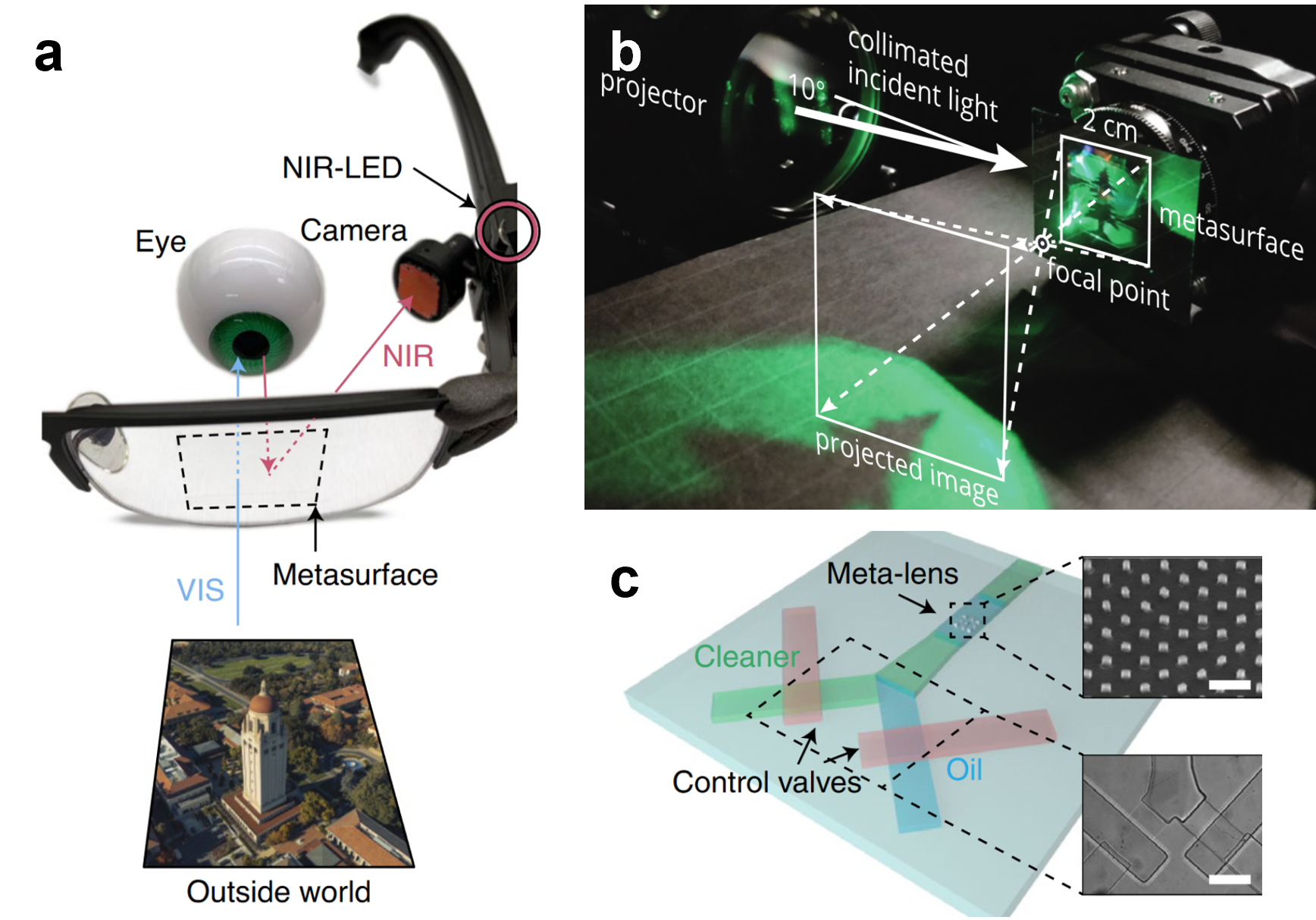
Emerging technologies such as augmented reality (AR) and brain–computer interfaces (BCI) are driving innovation in how humans interact with machines. We currently witness this with the rapid development of new handheld and wearable technologies. These technologies encompass a microcosm of electronic and optical devices that have to efficiently work together to perform a complex set of display, sensing, imaging, filtering, computation and illumination functions. We create novel ways of light-matter interactions and realize new optical devices and systems that can perform all the required functions on demand while being compatible with the restricted environments for these technologies.
Suggested readings
- Nat. Nanotechnol. 16, 1224-1230 (2021).
- Nat. Commun. 14, 5602 (2023).
- Nat. Nanotechnol. 17, 1097-1103 (2022).
Quantum technologies
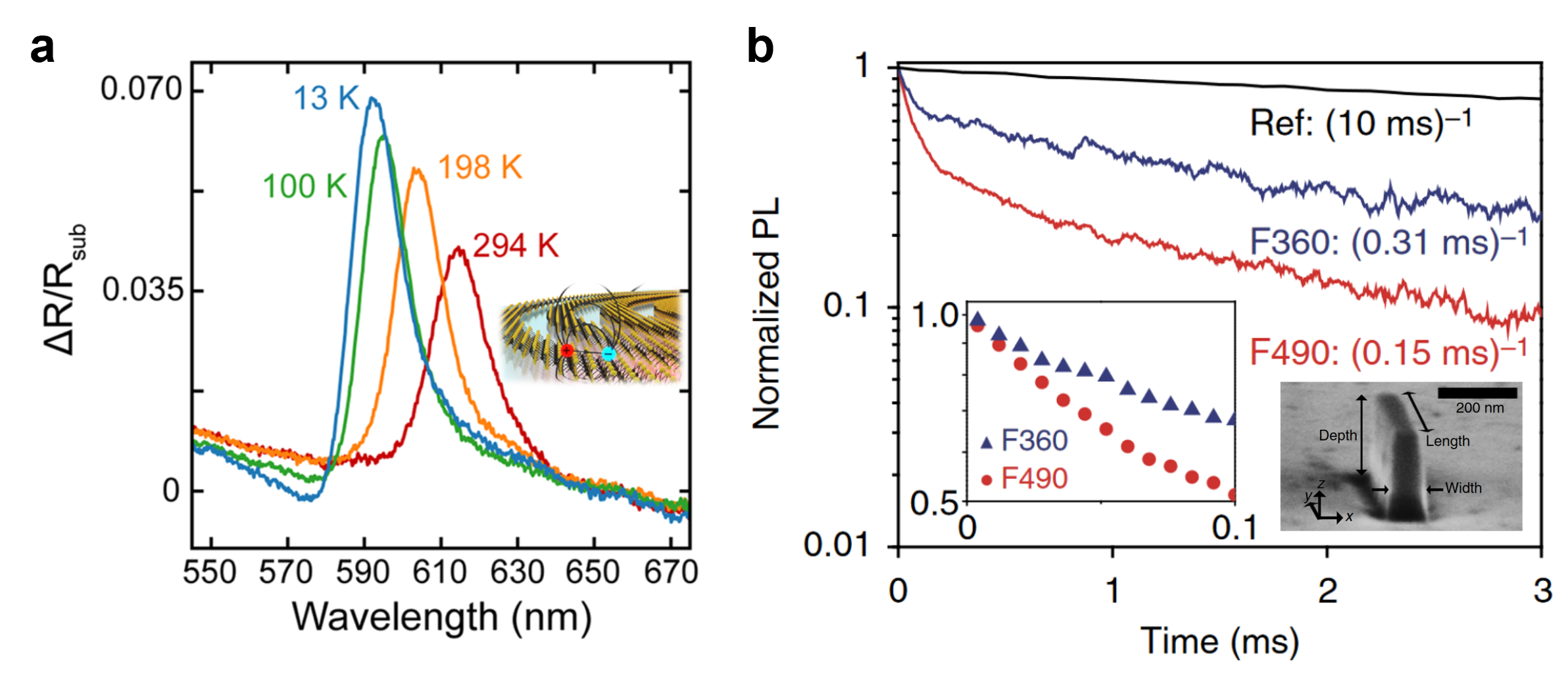
Quantum science is the framework of understanding physical phenomena in a perspective of wave-particle duality, clarifying a myriad of physics and chemical reactions at the fundamental level. Optical photons, bosonic quanta of electromagnetic waves at optical frequency can enable facile control over atomic transitions, chemical reactions, and any other phenomena associated with the charge oscillations. By maneuvering resonant light-matter interactions at atomic scale, we aim to manipulate emerging properties of quantum materials, atoms, and even photons at the fundamental, quantum level and create novel quantum technologies.
Suggested readings
- Nat. Photonics 14, 426-430 (2020).
- Nano Lett. 24, 6240-6246 (2024).
- Nat. Commun. 6, 305-701 (2015).
Sustainable communication & computation
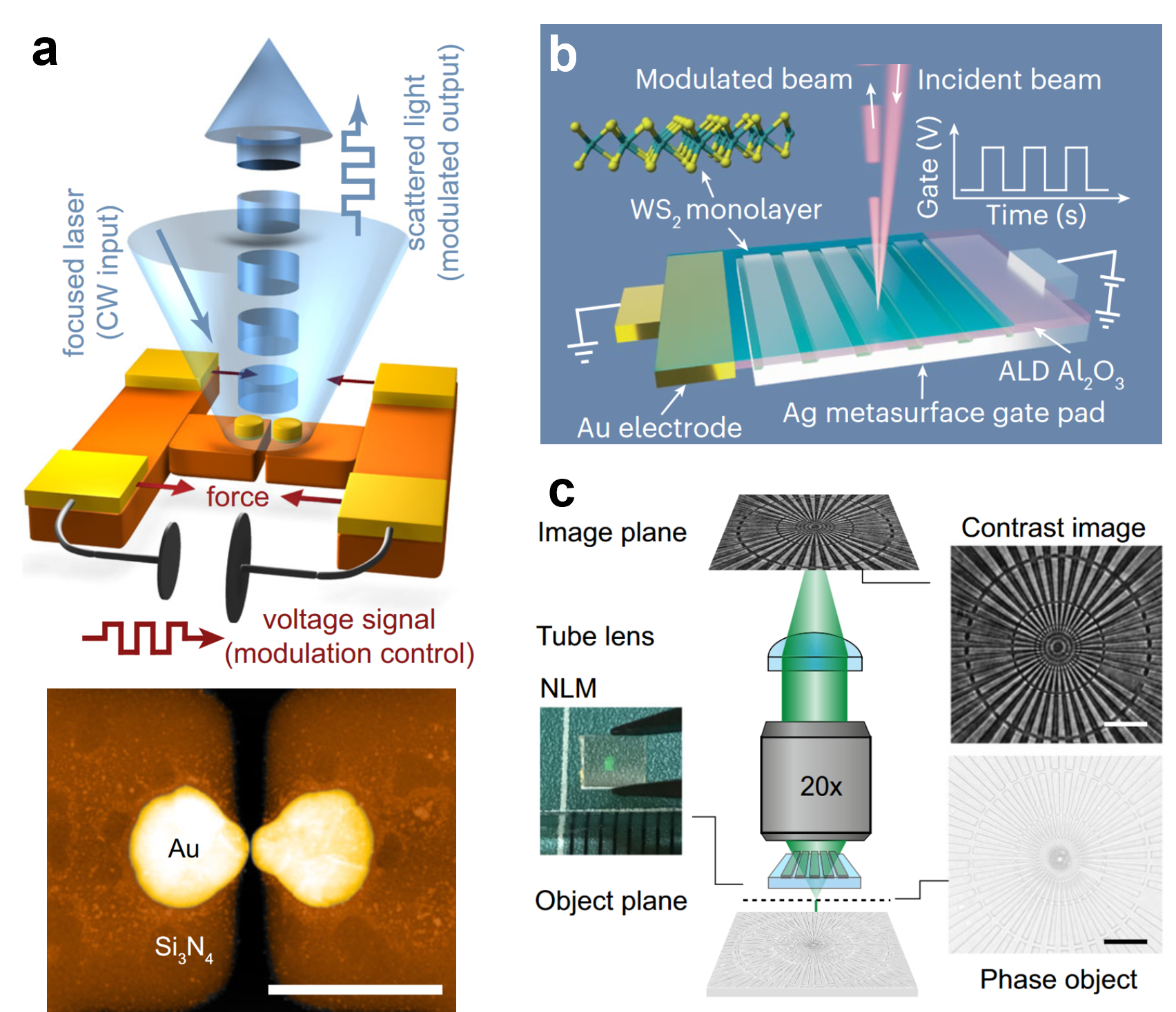
In step with a rapid progress of computation, communication, and their increasing needs, the requirement for carbon-free energy production and sustainable energy consumption has been becoming an emergency in a serious manner. For example, it is noted that by the end of the decade, AI data centers could consume as much as 20% to 25% of U.S. power requirements. We aim to develop ultralow-power, high-speed active optical devices and systems for communication and computation by leveraging our expertise in manipulating the light-matter interactions at the atomic scale.
Suggested readings
- Nat. Photonics 17, 897-903 (2023).
- Nat. Commun. 12, 1-7 (2021).
- Nat. Commun. 13, 7848 (2022).
- ACS Photonics 8, 872-878 (2021).
State-of-the-art characterization
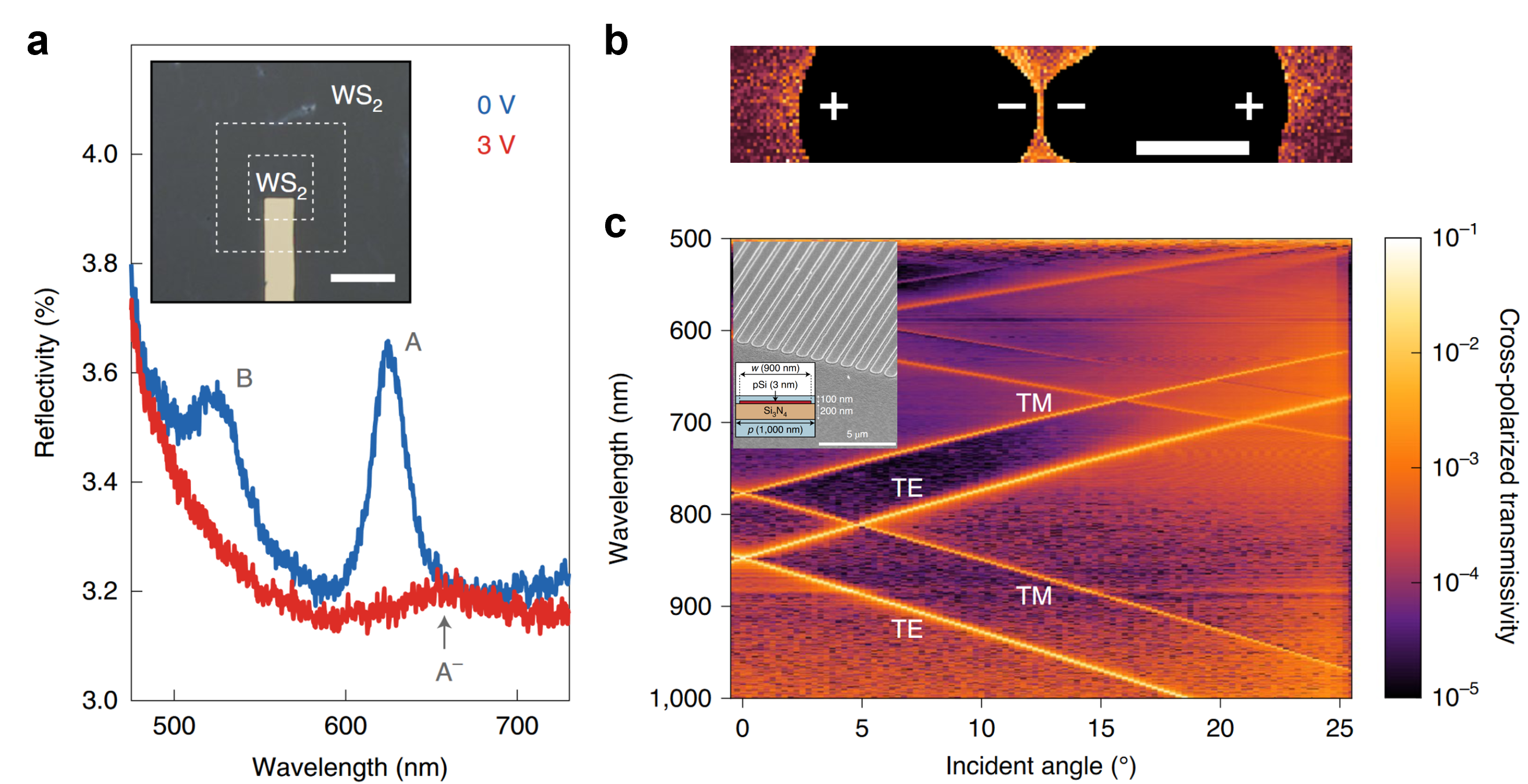
One of our strategies to study and create new light-matter interactions is exploiting state-of-the-art technologies (e.g., in-situ TEM and conceptually new spectroscopy) and characterize the unexplored aspects of emerging materials and the performance of brand new functions which are, otherwise, hardly measurable.
Suggested readings
- Nat. Nanotechnol. 16, 1224-1230 (2021).
- Nat. Photonics 14, 426-430 (2020).
- Nat. Commun. 12, 1-7 (2021).